The data laboratory built for serious coaches.
Connect every wearable your clients use, understand every biomarker that matters, and back every decision with evidence.
Book a DemoConnects with apps your clients already use









Every biomarker.
Across your whole roster.
Track readiness, HRV, sleep, training load, and 20+ other metrics for every client. Baseline comparisons show you exactly what changed, when it changed, and whether it matters.
Ask anything about
any client.
Ask about any client and get answers grounded in their actual data and current research. Coach AI already knows the context, so you can skip the explanation.
Run experiments.
See the science.
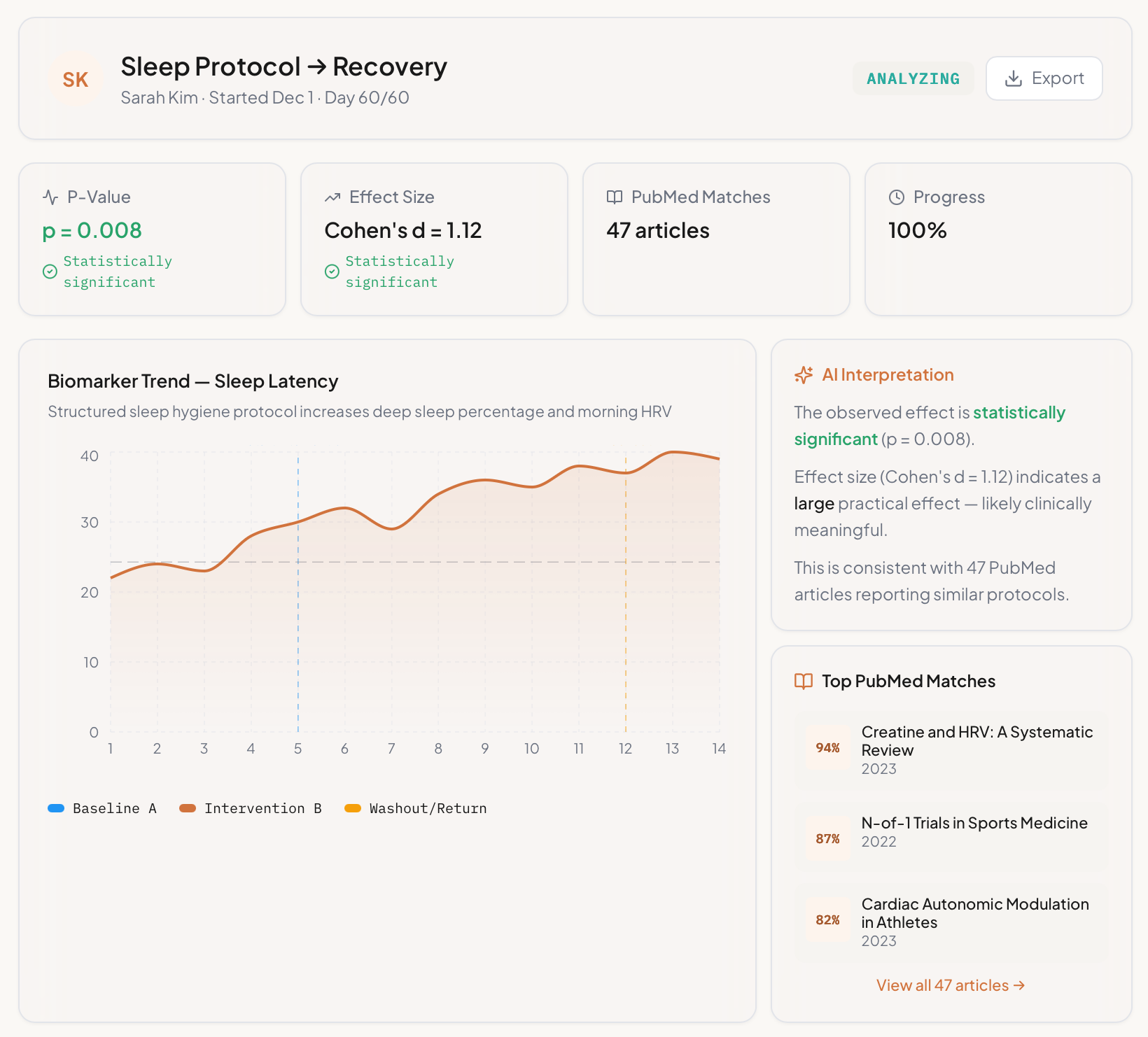
Design interventions and track them with real statistical rigor. VO2 Labs calculates significance, measures effect sizes, and matches your results against PubMed automatically.
Less time assembling data.
More time coaching.
One workspace, every client
Stop switching between Garmin, Oura, WHOOP, and spreadsheets. VO2 Labs pulls everything into one place so you can see your full roster at a glance and act on what matters.
Proprietary metrics
We calculate our own sleep index, readiness, and training load scores from raw wearable data, using formulas derived from published research and built with sports scientists.



Ready when you are.
Book a short call and we'll walk through your workflow with real data.
Book a Demo